
Institutional & Healthcare
Designing Furniture for Hospitals & Healthcare Facilities
27 April 2026 · 5 min read
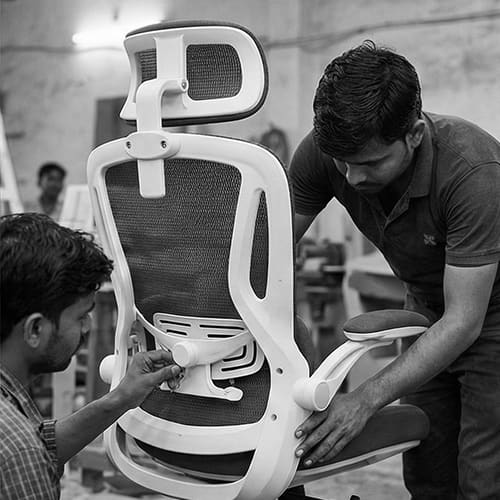
Furniture in a hospital or clinic works harder than furniture almost anywhere else. It's in use around the clock rather than a single shift, it's cleaned with harsh disinfectants multiple times a day, and unlike an office chair, a failure isn't just inconvenient — it can directly affect patient care. Specifying healthcare furniture means starting from a different set of priorities than a typical commercial order.
Surfaces that survive constant disinfection
Upholstery and finishes in clinical areas get wiped down with alcohol-based and chlorine-based disinfectants repeatedly through the day. Standard office-grade fabric and laminate degrade quickly under this — cracking, discolouring, or trapping moisture at seams. Healthcare furniture needs vinyl or specially rated upholstery, sealed seams, and powder-coated steel frames that won't corrode under repeated chemical exposure.
Fewer seams, fewer places for infection to hide
- Waiting-area seating with minimal seams and gaps, so fluids and debris can't collect where they can't be cleaned
- Rounded edges and corners throughout, both for infection control and for patient/visitor safety in high-traffic corridors
- Antimicrobial-treated surfaces in high-contact areas — armrests, bed rails, waiting benches
- Easily replaceable component parts (cushions, panels) rather than fully bonded units, so a single damaged section doesn't require replacing the entire piece
24/7 duty cycles change the durability math
A hospital waiting bench or nursing station chair doesn't get evenings and weekends off the way office furniture does. That continuous duty cycle means mechanisms, casters and upholstery all face several times the wear an equivalent office piece would see in the same calendar year — which is exactly why healthcare and institutional seating should be evaluated against BIFMA-style durability testing rather than standard commercial specifications.
Twin carrels, collaboration seating and tandem waiting units in our institutional range are built with this duty cycle in mind — reinforced frames, replaceable upholstery panels, and finishes rated for repeated disinfection. If you're planning furniture for a new hospital wing or clinic, we can work directly from your facility layout to spec the right combination.
Keep Reading
More From the Journal
 Institutional & Healthcare
24 Sept 2026 · 5 min read
Classroom Furniture Sizing in India: Why One Desk Size Doesn't Fit Every Age Group
A desk sized for a Class 10 student is the wrong height for a Class 2 student. Here's why age-appropriate sizing matters more than most school procurement budgets for.
Read Article Institutional & Healthcare
26 Aug 2026 · 5 min read
Full-Pad vs Half-Pad Chairs: Choosing Seating for High-Traffic Institutional Spaces
Auditoriums, training halls and waiting areas put chairs through far more daily sit-stand cycles than an office ever will. Here's how to choose between full-pad and half-pad seating.
Read Article Institutional & Healthcare
18 May 2026 · 6 min read
Furnishing Schools & Institutions: A Practical Guide for Administrators
Bench sizing by age group, storage that survives daily use, and why institutional furniture procurement is nothing like office procurement.
Read Article